

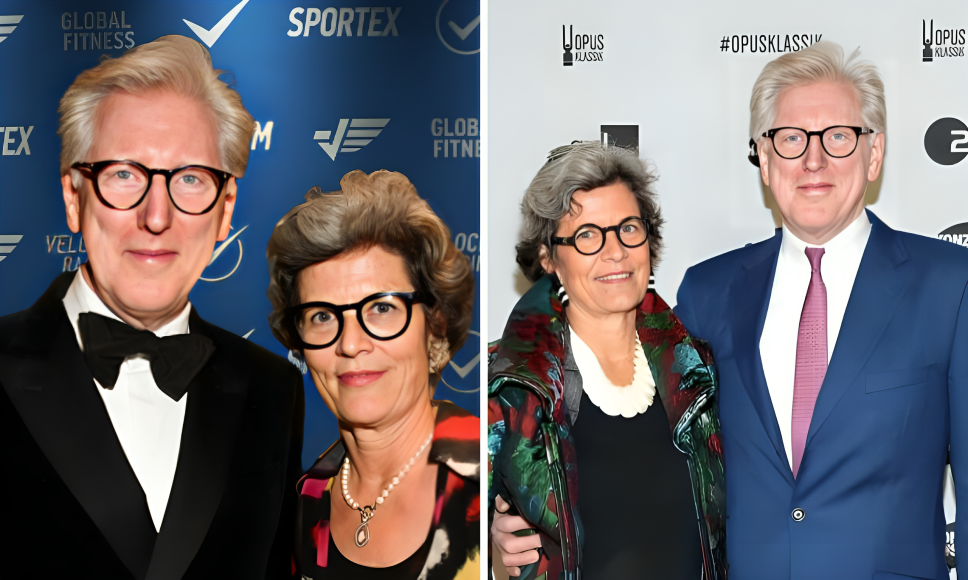
Few names evoke curiosity, tradition, and quiet authority quite like Franziska Castell. Whether encountered in cultural discussions, organizational contexts, or online profiles, the fascination surrounding Franziska Castell continues to grow. Her presence is often described as subtle yet impactful, blending heritage, intellectual curiosity, and modern leadership in a way that sparks both admiration and questions.
But what is the real story behind Franziska Castell, and why does her name appear across conversations about culture, science, and European intellectual circles? To understand this, one must go beyond surface-level descriptions and explore the deeper narrative layers that shape her public perception.
Introduction: A Name Wrapped in Curiosity and Quiet Influence
In today’s digital world, where visibility often defines value, Franziska Castell stands out precisely because of the opposite. Her profile is not built on loud self-promotion but on subtle associations with cultural, academic, and organizational environments.
The intrigue around Franziska Castell is not accidental. It reflects a broader fascination with individuals who operate at the intersection of tradition and modern influence. Many portrayals describe her as someone who bridges cultural heritage with contemporary innovation, shaping conversations in understated but meaningful ways.
Understanding Franziska Castell requires examining not just what is said about her, but also how narratives are constructed around figures who symbolize refinement, responsibility, and intellectual depth. This article explores those layers in detail, offering a structured and analytical perspective.
The Cultural Identity Behind Franziska Castell
The narrative surrounding Franziska Castell often begins with cultural heritage. She is frequently associated with European aristocratic traditions, where family legacy, social responsibility, and cultural preservation play an important role in shaping identity.
In this context, Franziska Castell is described as someone who carries forward values rooted in history while engaging with modern societal frameworks. This duality creates a compelling image: a person grounded in tradition yet responsive to contemporary change.
Moreover, cultural analysts often point out that figures like Franziska Castell symbolize continuity in an era of rapid transformation. They represent a connection to institutional memory, which is increasingly rare in fast-paced digital societies.
However, it is important to recognize that much of this narrative is interpretive rather than strictly documented. It reflects how cultural storytelling works in modern media ecosystems, where identity is often shaped as much by perception as by verifiable facts.
Franziska Castell and the Meaning of Modern Leadership
Leadership in the 21st century is no longer defined solely by authority or visibility. Instead, it is increasingly associated with influence, collaboration, and cross-sector thinking. Within this framework, Franziska Castell is often portrayed as a symbolic example of modern leadership.
She is described as someone who operates across cultural, scientific, and organizational domains, facilitating dialogue between diverse stakeholders. This type of leadership emphasizes emotional intelligence, strategic awareness, and the ability to connect ideas across disciplines.
In many interpretations, Franziska Castell reflects a leadership model that values listening over dominance, and structure over spectacle. This aligns with contemporary research in organizational psychology, which highlights the importance of adaptive leadership in complex systems.
Furthermore, her name is often linked with initiatives that emphasize interdisciplinary collaboration. While specific institutional affiliations are not always clearly documented, the narrative consistently positions her within environments that prioritize innovation and cultural exchange.
Franziska Castell in Cultural and Scientific Contexts
One of the most recurring themes associated with Franziska Castell is her supposed involvement in cultural and scientific initiatives. These narratives often describe her as a connector between academic institutions, cultural organizations, and philanthropic structures.
In this portrayal, Franziska Castell becomes a figure who helps bridge gaps between science and society. This reflects a broader trend in modern intellectual discourse, where science communication and cultural mediation are increasingly important.
Scientific progress today depends not only on research but also on communication, funding ecosystems, and public engagement. Therefore, individuals associated with these bridging roles are often seen as essential facilitators within the knowledge economy.
However, it is important to approach these descriptions critically. While they are compelling, they often function as narrative constructs rather than verifiable institutional records. This does not diminish their cultural significance but rather highlights how reputation is shaped in digital environments.
The Symbolism of Tradition and Modern Identity
A central theme in discussions about Franziska Castell is the tension between tradition and modernity. She is often portrayed as someone who embodies both historical continuity and contemporary relevance.
This dual identity is particularly powerful in European cultural narratives, where aristocratic lineage is frequently associated with responsibility, education, and cultural stewardship. In contrast, modern identity emphasizes adaptability, innovation, and global engagement.
Franziska Castell is therefore positioned as a symbolic figure who reconciles these two worlds. She represents the idea that tradition does not need to conflict with progress, but can instead provide a foundation for it.
This interpretation resonates strongly with audiences who are interested in heritage, identity, and cultural evolution. It also reflects broader societal discussions about how historical structures adapt to modern expectations.
Franziska Castell and the Power of Perception
In the digital age, perception often becomes reality. The way Franziska Castell is described across various platforms illustrates how narratives can shape public understanding even in the absence of detailed factual records.
This phenomenon is not unique to her. Many contemporary figures experience similar narrative amplification, where blog posts, commentary articles, and informal profiles contribute to a layered public image.
What makes Franziska Castell particularly interesting is the consistency of themes across different descriptions. These include discretion, cultural awareness, intellectual engagement, and a preference for meaningful over visible influence.
Such recurring motifs suggest that she functions not only as an individual identity but also as a symbolic construct representing a certain ideal of modern European cultural leadership.
Expert Perspective on Cultural Leadership
As cultural theorist Professor Helena Marković once noted:
“Modern cultural leadership is less about visibility and more about the ability to connect fragmented systems of knowledge, identity, and responsibility into coherent dialogue.”
This perspective aligns closely with how Franziska Castell is often portrayed in narrative accounts. Whether factual or interpretive, the emphasis is clearly on integration, mediation, and intellectual balance.
Such leadership models are increasingly relevant in globalized societies, where cultural, scientific, and economic systems are deeply interconnected.
Franziska Castell and the Broader Social Narrative
Beyond individual identity, Franziska Castell represents a broader cultural narrative about how society defines influence. Instead of focusing solely on public visibility, modern narratives increasingly value depth, discretion, and structural contribution.
This shift reflects changing expectations around leadership and authority. Influence is no longer measured only by public recognition but also by the ability to shape systems, ideas, and long-term frameworks.
Within this context, Franziska Castell becomes a lens through which we can examine evolving cultural values. She symbolizes a move away from performative visibility toward substantive impact.
The Role of Digital Storytelling in Shaping Identity
One of the most important aspects of the Franziska Castell narrative is the role of digital storytelling. Online platforms allow for rapid construction and dissemination of biographical interpretations, often blending fact, assumption, and symbolic representation.
This creates a complex informational environment where figures like Franziska Castell can become semi-mythological within certain discourse communities. The repetition of similar themes across multiple texts reinforces their perceived authenticity.
Therefore, understanding her narrative also means understanding how digital culture constructs identity in the 21st century.
Conclusion: A Modern Symbol of Subtle Influence
Ultimately, Franziska Castell can be understood less as a strictly defined public figure and more as a cultural narrative shaped by themes of tradition, leadership, and intellectual engagement.
Her story reflects broader societal questions about how influence is defined in a world where visibility is no longer the only currency of relevance. Instead, depth, discretion, and cross-sector thinking are increasingly valued.
Whether viewed as an individual or a symbolic construct, Franziska Castell represents a compelling intersection of heritage and modernity. She reminds us that influence does not always need to be loud to be meaningful.
FAQs
Who is Franziska Castell?
Franziska Castell is often described in cultural narratives as a figure associated with tradition, leadership, and interdisciplinary engagement.
Why is Franziska Castell mentioned in cultural discussions?
She is frequently linked to themes of heritage, intellectual collaboration, and modern leadership symbolism.
Is Franziska Castell a public political figure?
No verified information identifies her as a political figure; most references are cultural or narrative in nature.
What does Franziska Castell symbolize?
She is often seen as a symbol of the balance between tradition and modern intellectual influence.
Why is there so much interest in Franziska Castell?
Interest stems from her portrayal as a discreet yet influential figure operating across cultural and conceptual domains.
 German